Guided by “Fate” Back to This Land — The Storyteller Who Loves Oki Shrine
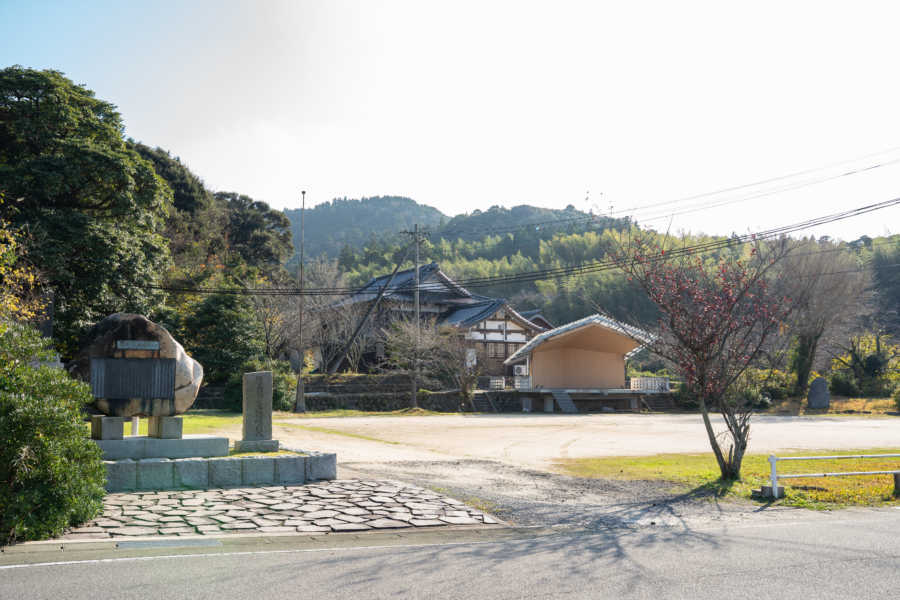
Ama Town is a place where the name of Emperor Go-Toba still lingers vividly. At its center stands Oki Shrine, a classic stop that visitors rarely miss. Yet this is far more than a tourist attraction. After the Jōkyū War, Emperor Go-Toba was exiled to this island, where he spent 19 long years. It is a place where the 800-year-old memory of an emperor—longing for the capital, composing poetry, and ultimately passing away here—still lives on with striking clarity.
The moment you step into the shrine grounds, a dignified silence envelops you. As you walk deeper along the approach, the air grows clearer, and your posture straightens naturally in quiet reverence.
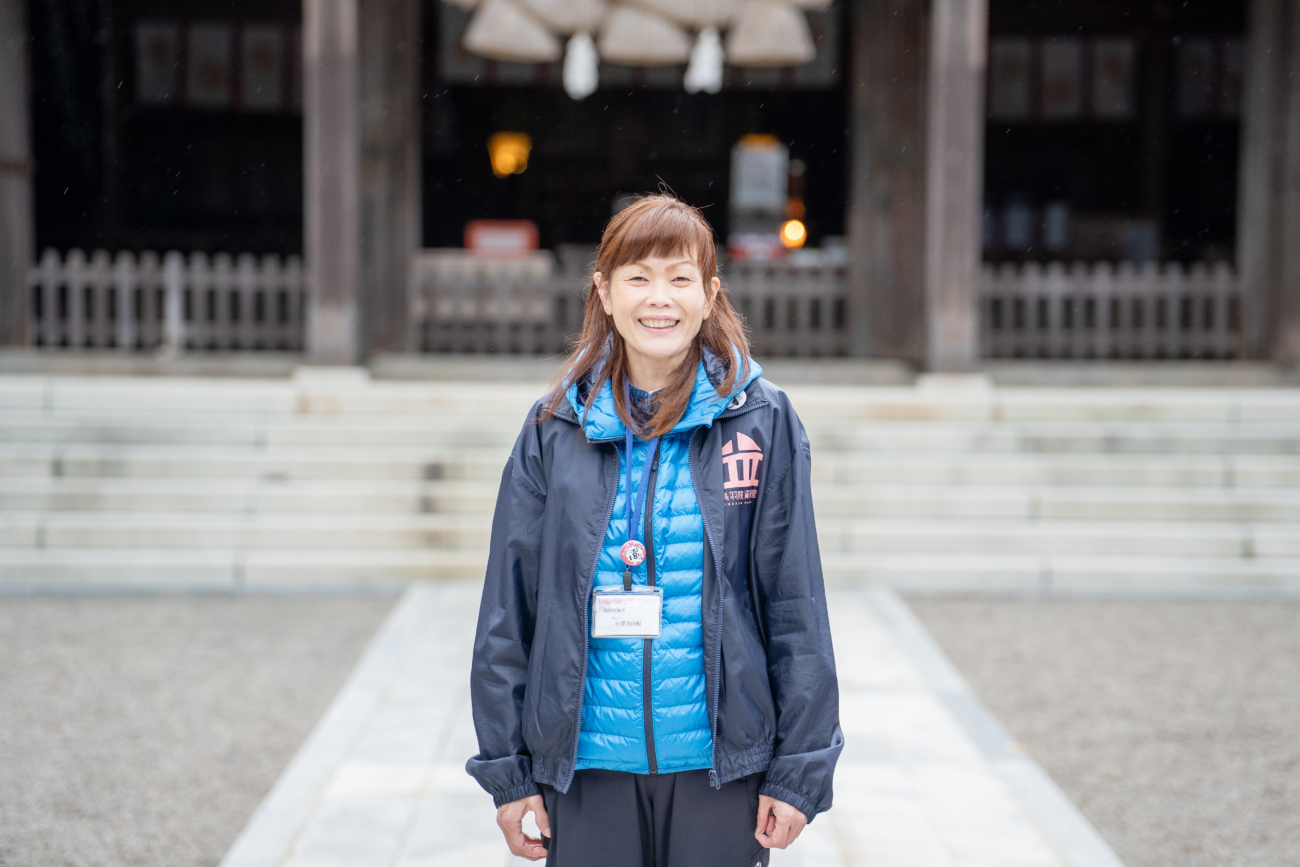
In this place steeped in history, there is a woman who guides visitors with a gentle smile, as if welcoming guests into her own garden. She is Ms. Ozawa, a guide with Oki Ōfūsha. Her tours are never stiff or overly formal. Rather than reciting technical jargon, she reads her guests’ expressions, cherishing the atmosphere of each fleeting moment.
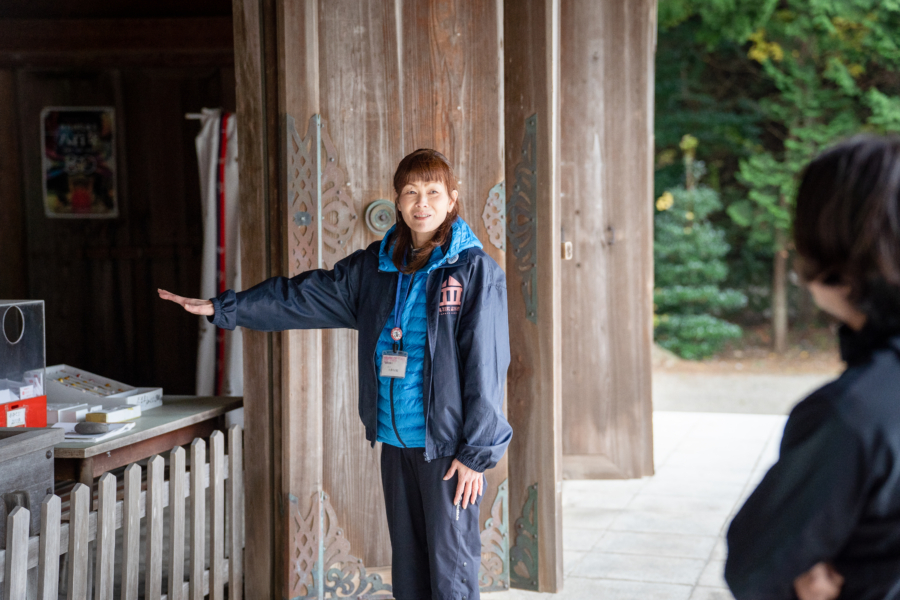
“I’m not a historian, nor am I a botanical expert,” she says. “My specialty is people. Within the limited time of a tour, I think about how to make it truly enjoyable. How can I help visitors take home the memories of this place as something warm and meaningful? That’s what matters most to me.”
At the start of every tour, Ms. Ozawa begins by “listening.” She instantly senses the atmosphere and searches for the best distance and rhythm for each guest. Watching their reactions, she adds or subtracts words. If someone seems eager to take photos, she quietly waits. If they seek stories, she offers them generously. Even the way she greets guests and the order in which she speaks are never the same twice.
“Guided tours are limited in time and efficiency is often expected. Some visitors want to delve deeply into history; others want to learn about Emperor Go-Toba’s waka poetry; still others are curious about present-day island life. I adjust the content flexibly according to each guest’s interests.”
Following her along the sun-dappled path, the first place she shows us is the Imperial Cremation Mound of Emperor Go-Toba. This sacred site holds most of his remains, marking the place where he ended his life on this island. It feels removed from the ordinary world, as if time itself has paused.
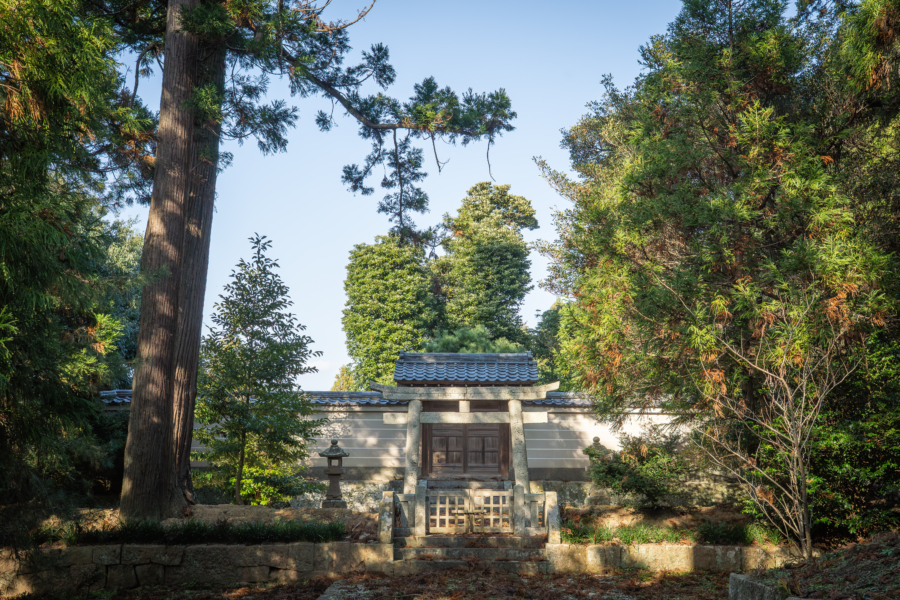
“In 1873, by order of Emperor Meiji, he was enshrined at Minase Shrine in Osaka. However, his actual remains still rest here. For 800 years, the Murakami family has served as guardians of this sacred site, appointed by the Imperial Household Agency. The head of the family inherits the name ‘Sukekurō,’ and the current head is the 48th generation.”
For eight centuries, someone has continued to protect this place without interruption. In sharing this story, Ms. Ozawa herself becomes one of those who quietly continue to hold Emperor Go-Toba in their hearts across time.
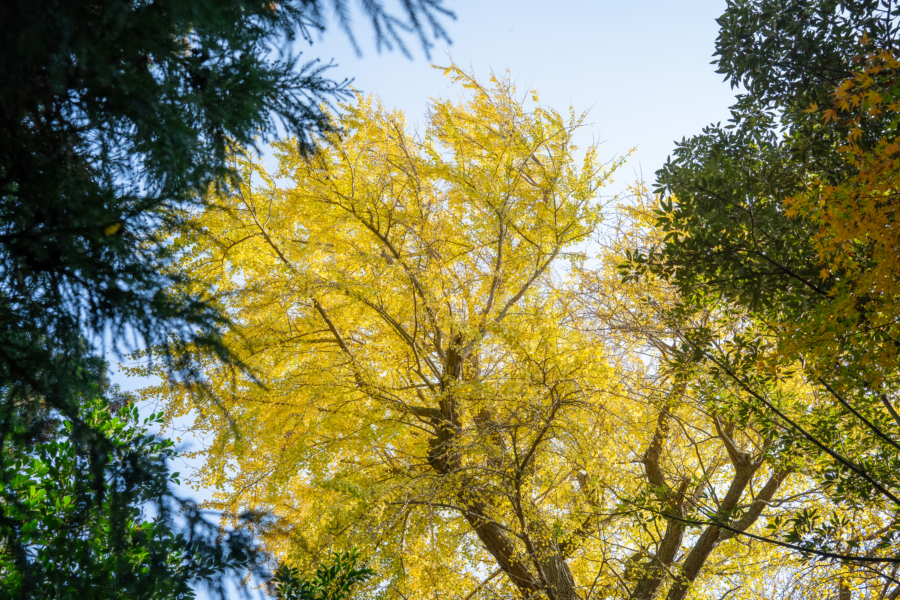
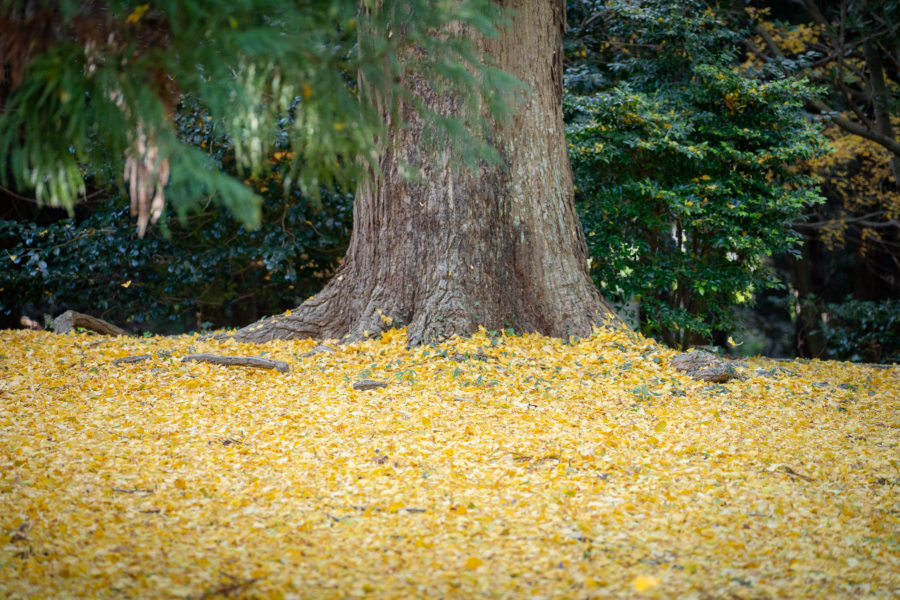
Looking up, we notice it is autumn. The ginkgo trees within the grounds blaze in brilliant gold, scattering shimmering leaves with every gust of wind. As we step across the golden carpet, Ms. Ozawa smiles.
“Beautiful, isn’t it? Each season here has its own breathtaking expression.”
Oki Shrine transforms with the seasons: cherry blossoms in spring, deep greenery in summer, golden brilliance in autumn, and snow in winter. Perhaps Emperor Go-Toba, too, felt the passing of time and the ache of impermanence within these same seasonal shifts.
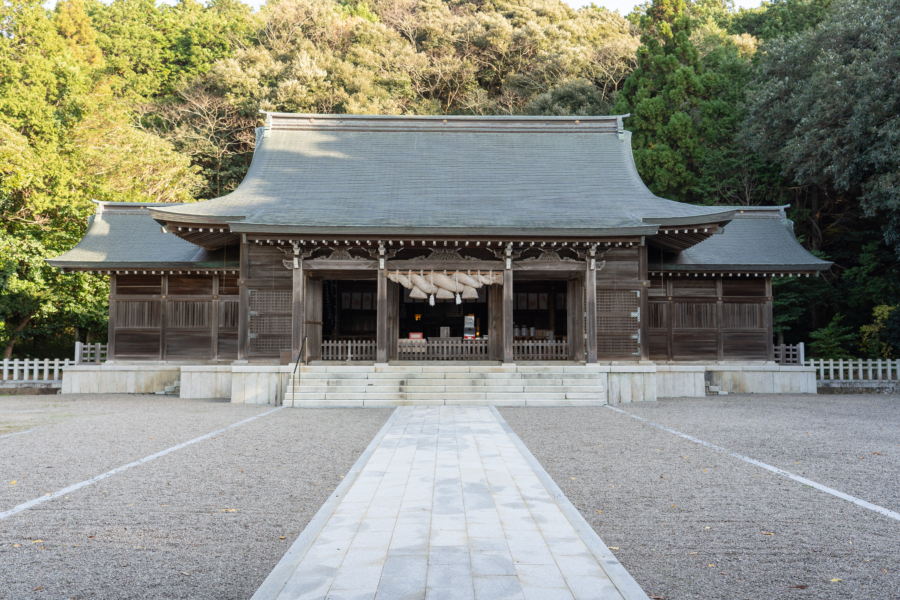
Standing before the grand shrine building, one might assume it dates back centuries. Yet Ms. Ozawa reveals a surprise.
“Actually, this shrine was built in 1939, so it’s relatively new. The main hall is constructed in the traditional ‘Oki-zukuri’ architectural style and was built to commemorate the 700th anniversary of Emperor Go-Toba’s death. Before that, this entire area was rice fields.”
For 700 years after his passing, the islanders never forgot him. The magnificent shrine before us may be less a symbol of distant reverence and more a warm and heartfelt embodiment of the islanders’ enduring affection. Even today, locals fondly call him “Gotoban-san.”
Ms. Ozawa’s passion for guiding around Oki Shrine is rooted in more than profession—it is bound by a mysterious connection.
Born and raised in Ama Town, she left the island after high school to pursue a career as a makeup artist, working for a cosmetics company. However, family circumstances led her to return around age twenty.
In her early twenties, she was unexpectedly invited to work as a bus guide for Ama Kōtsū, the local taxi and bus company.
“A neighbor came to my workplace and said, ‘We’re short on guides starting in April—you should do it.’ I debuted just a month later. Since there was no practical training, drivers would run empty buses during breaks so I could practice.”
Though it began as trial and error, her natural gift for conversation made the job increasingly rewarding. Later, she moved to Aichi Prefecture and spent nearly 20 years away from the island. She returned during the COVID-19 pandemic, around the time her son was entering elementary school.
When she stepped off the ferry, the landscape that greeted her looked exactly as it had two decades earlier. People change, times change—yet the island’s nature remains unhurried and constant.

Soon after returning, she found herself drawn back to guiding, this time with Oki Ōfūsha.
“When I became a guide again, my family said, ‘It’s your fate.’”
Only later did she fully understand those words. Her childhood home stands just beside Oki Shrine. The shrine grounds were her playground, an ordinary part of daily life. And this was no coincidence. Her grandfather deeply loved the history of Emperor Go-Toba and personally petitioned the mayor to borrow the Emperor’s name for a guesthouse he built nearby called “Gotoba-sō.” Her mother, meanwhile, ran both the guesthouse and a small bar named Sankyū for over 40 years, creating a gathering place for islanders and travelers alike.
“My grandfather loved this place, and my mother protected it. Now it’s my turn to share its story. It felt less like I ‘chose’ to return after 20 years and more like I was guided back here. Guiding at Oki Shrine feels less like work and more like telling my family’s story and my own childhood memories.”
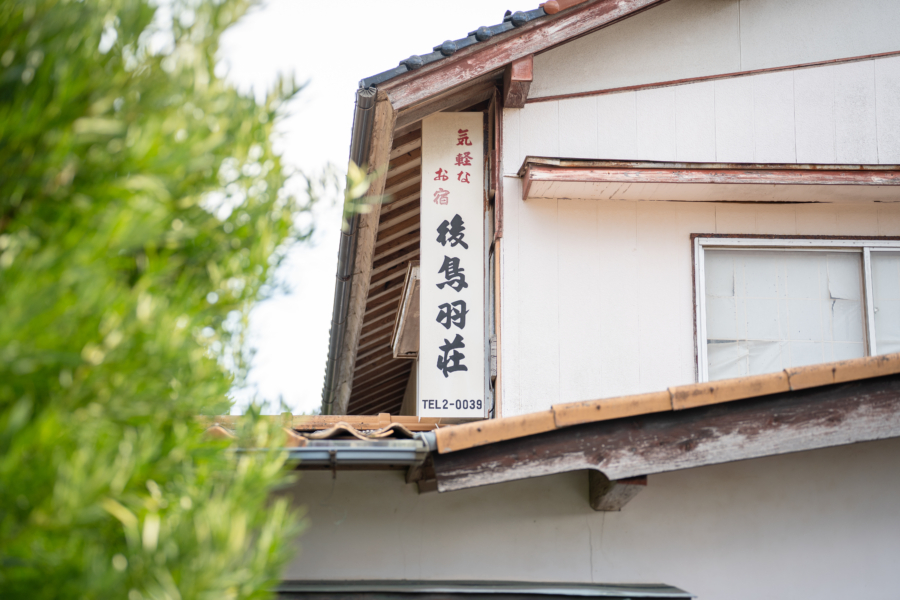
She holds a quiet dream: to reopen the currently closed guesthouse and create a place where people can gather, stay, and talk. She imagines guiding visitors by day, then sharing drinks at night while reflecting on the day’s journey, all within sight of Oki Shrine.
The girl who once ran through these shrine grounds has become a storyteller of this land. Her ordinary childhood memories have become the depth behind her guiding voice. In a landscape that never changes, human lives continue to evolve. Walking through Oki Shrine with Ms. Ozawa, visitors are sure to discover an Oki that guidebooks alone cannot reveal.