
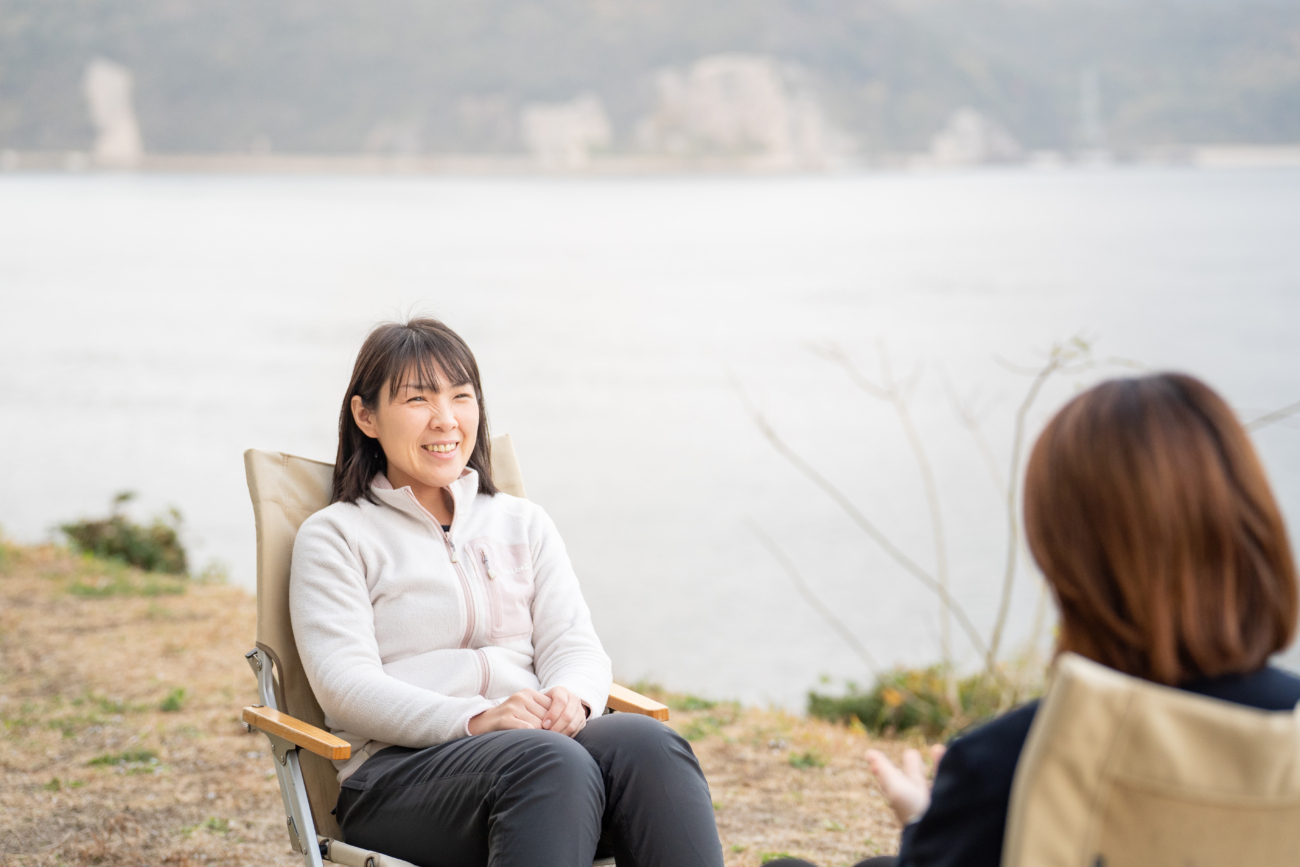
The “Rice-Growing Island” — Discovering the Story of the Land Through All Five Senses in Ama Town
“Go ahead—snap this branch and bring it close to your nose.”
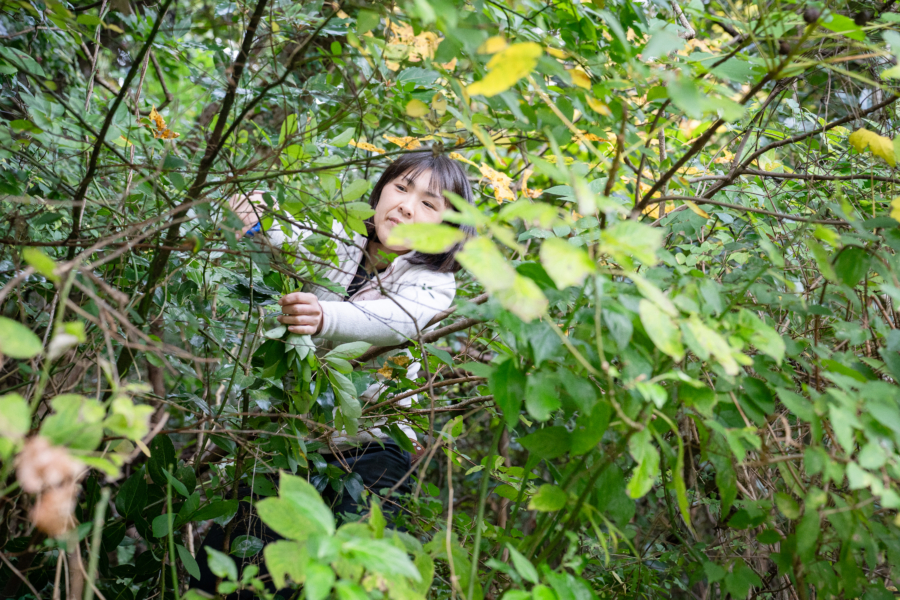
The small twig handed to us comes from a kuromoji shrub growing wild in the forests of Ama Town. Locally called fukugi, it has long been enjoyed as a health tea. When you gently break the slender branch, a soft fragrance unfurls from within. It carries the damp freshness of the forest, like wild herbs after rain, with an elegant hint of citrus that slips quietly into your senses.

Scents, textures, flavors—things that cannot be conveyed through pamphlets alone. These fleeting moments, accessible only through the five senses, are what Ms. Wakayanagi of NPO Oki Shizenmura treasures most as a guide.
During our interview, she frequently pauses and confidently steps into the forest. “Look over there,” she says, pointing to a thick vine climbing high into a tree, bearing reddish-purple fruit.
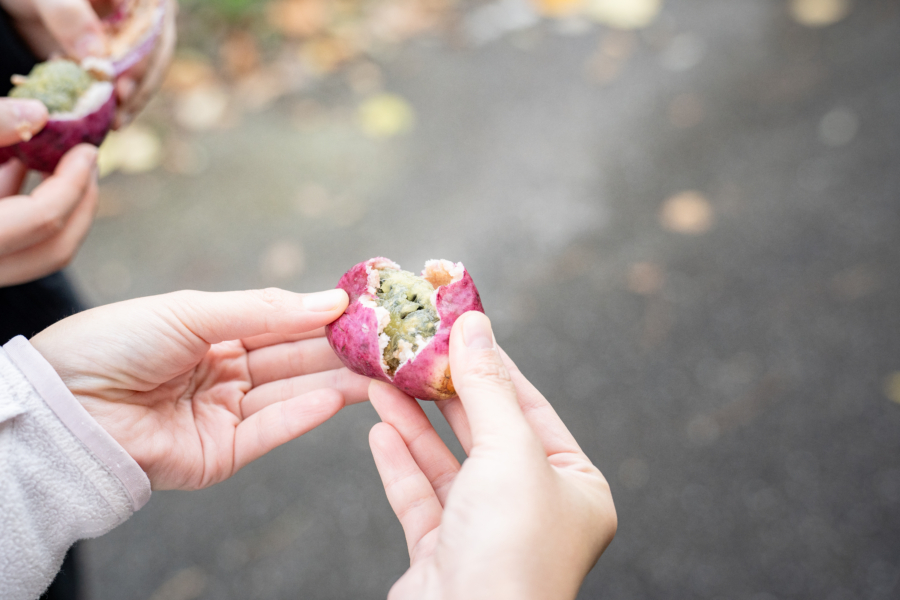
“That’s mube. On the island we call it fuyubi. It used to be a kind of winter snack. Unlike akebi found on the mainland, mube doesn’t split open when it ripens. That’s why it stays on the vine through winter, becoming a treat for birds—and for us.”
When we open one, the inside reveals soft, translucent pulp. A bite spreads a gentle, rustic sweetness across the palate.
“I don’t want people to just collect knowledge. I want them to take home that feeling of ‘Wow!’ ‘Delicious!’ ‘How fun!’”
As you engage with the forest this way, your perception shifts. What once seemed like a uniform stretch of green becomes a gathering of named trees, fruits, and grasses. Each presence comes into sharper focus.
On the day of our visit, we joined her for a driving tour around Ama Town. “Today, I’ve prepared a theme,” she says playfully as she takes the wheel.
Her tours draw from a wide range of themes, tailored to each guest’s interests and even the day’s weather. For geology lovers, she begins with rocks; for history enthusiasts, with myths. In just a short conversation, she instinctively finds the doorway to each person’s curiosity.
The theme she chose for us was: “Why is rice cultivation so thriving in Ama Town alone among the Dōzen Islands?”
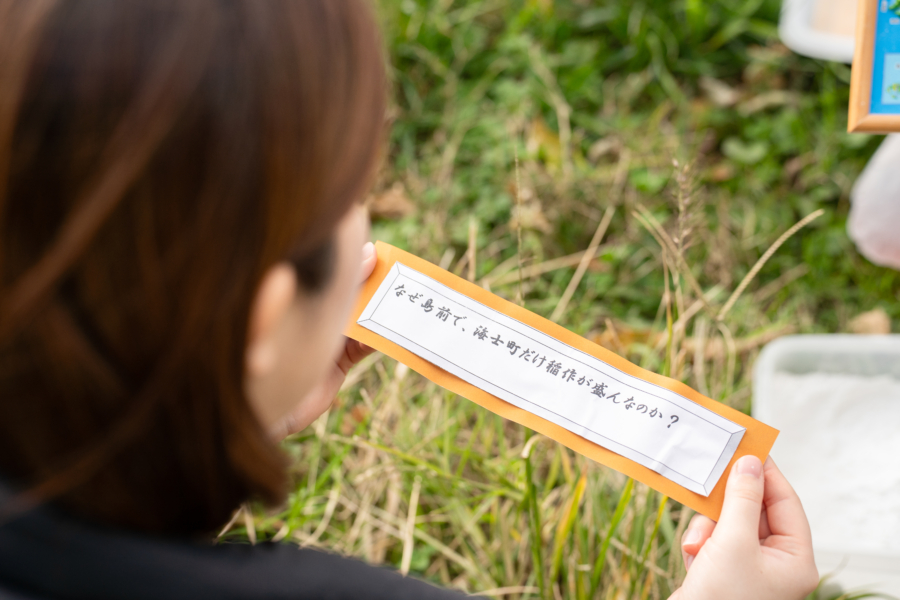
We drive inland into a rural landscape that, in season, ripples with golden rice. Compared to neighboring Nishinoshima and Chiburijima—known for rugged cliffs and grazing pastures—Ama’s wide paddies stand out. Why do islands within the same caldera display such different scenery?
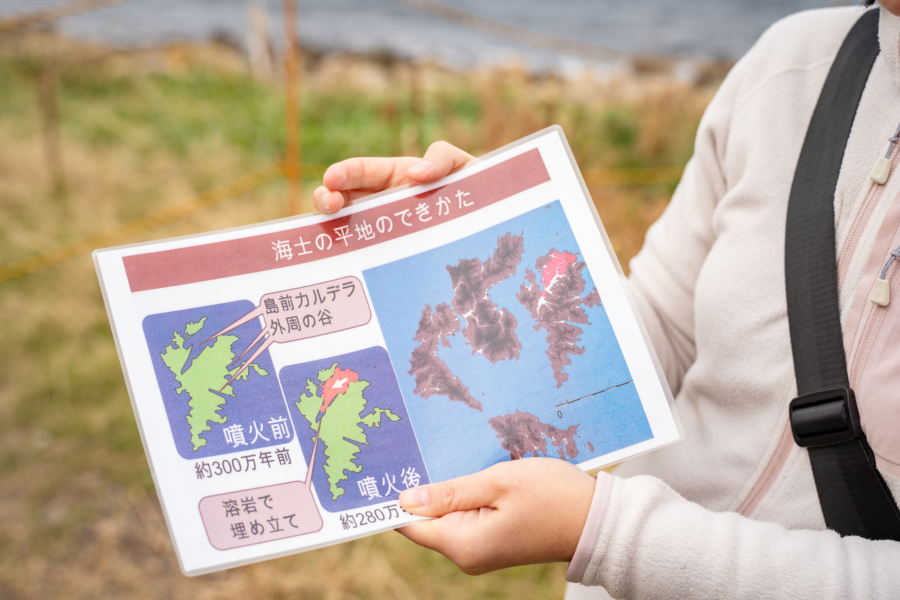
“The answer lies in volcanic activity 2.8 million years ago,” she explains. “This area, called the Amakata Plain, is believed to have been a deep inlet when the Dōzen Caldera first formed about 6.3 to 5.3 million years ago. Later, around 2.8 million years ago, volcanic activity occurred again at Akeya Coast. Low-viscosity lava flowed into the sea, cooled, and formed a flat plateau. Depressions further inland collected water, eventually creating vast wetlands.”
“But rice paddies didn’t exist from the start. People gradually reclaimed these wetlands by hand, cultivating them over an almost unimaginable span of time. The fields you see today are the result of that long accumulation of effort.”
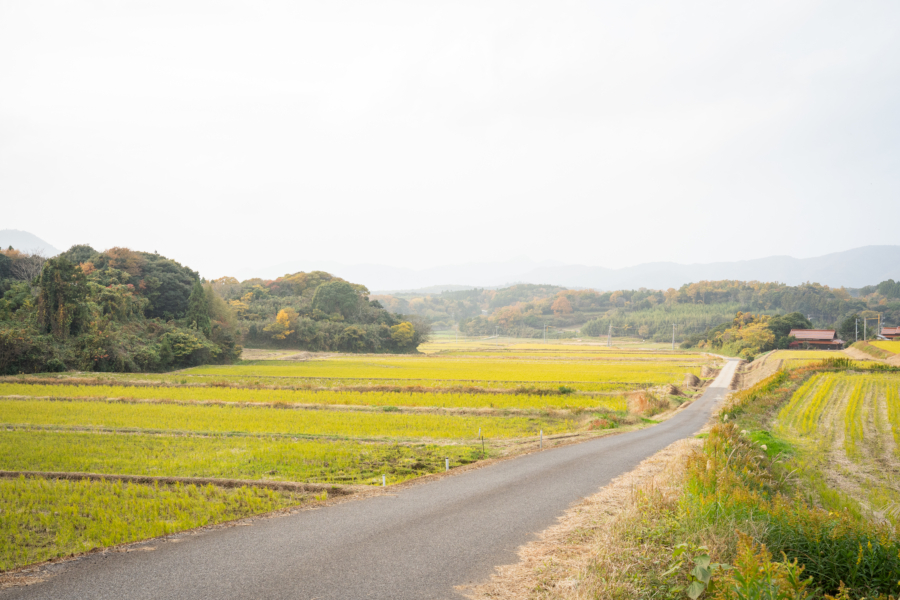
She adds softly that this pastoral view is one of her favorites.
“The unique traits shaped by ancient Earth were layered with human life and history, and that’s how each island developed completely different cultures.”
Ama became a rice-growing island thanks to its lava-formed plains and abundant spring water. Chiburijima, blessed with rich water sources, developed as a pastoral island where cattle graze peacefully. Nishinoshima, with its steep cliffs forming natural harbors, became a fishing island shaped by rough seas. Slight geological differences changed landscapes, livelihoods, and ways of living. At the forefront of that long chain of change stand the people of today.
Originally from Yokohama, Ms. Wakayanagi moved to Ama in 2019. After working as a high school social studies teacher and later as a childcare worker, she relocated with her family to raise her child in nature and study outdoor education.
At first, she worked as a nursery teacher with Oki Shizenmura, watching children grow in the forest. Seeing children instinctively pluck grasses, gather acorns, and chase insects stirred something within her.
“The children play in the forest as if it’s completely natural. But as an adult, I realized I barely knew which plants were edible or dangerous. I didn’t even know the names of common grasses or acorns. That’s when I felt I needed to learn—so children could safely explore and challenge themselves.”
She began studying earnestly: edible plants, toxic species, seasonal gifts of the forest. That desire led her to join the organization’s Nature Team, focusing on guiding and wildlife research.
Perhaps influenced by her teaching background, her voice is gentle and warm. She explains even complex geopark concepts in a way that feels like a parent reading a storybook—clear, patient, and heartfelt.
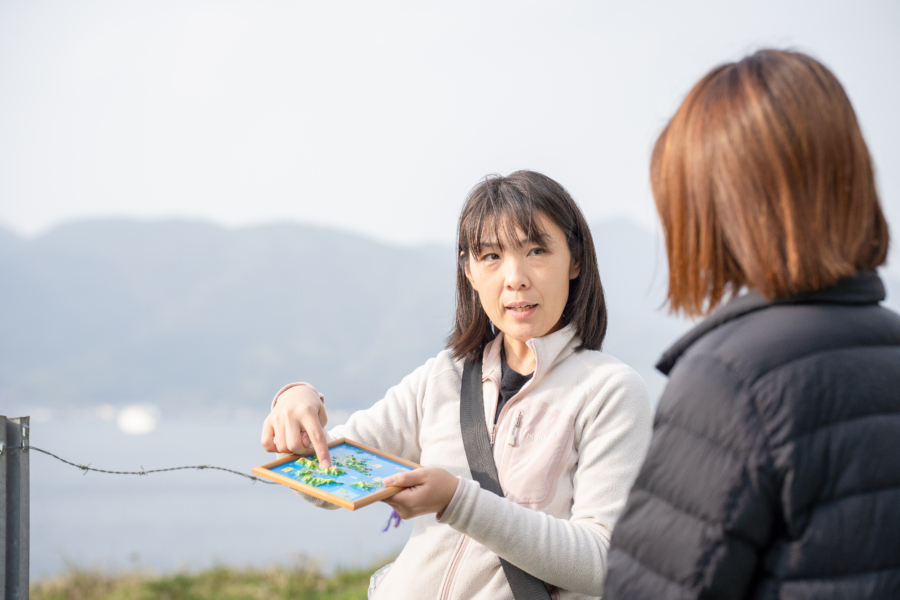
What she values most in guiding is recognizing that “everyone’s doorway to interest is different.” Visitors come with varied goals: breathtaking views, historical traces, or simple healing.
So she first listens carefully, then builds the route accordingly. Some enter through geology, others through plants, others through daily island life. Different entrances, but all connected behind the scenes: ancient volcanic origins, a rare ecosystem nurtured atop them, and human life shaped by remote island conditions. As part of the Oki UNESCO Global Geopark, these layers intertwine, gradually revealing the whole picture.
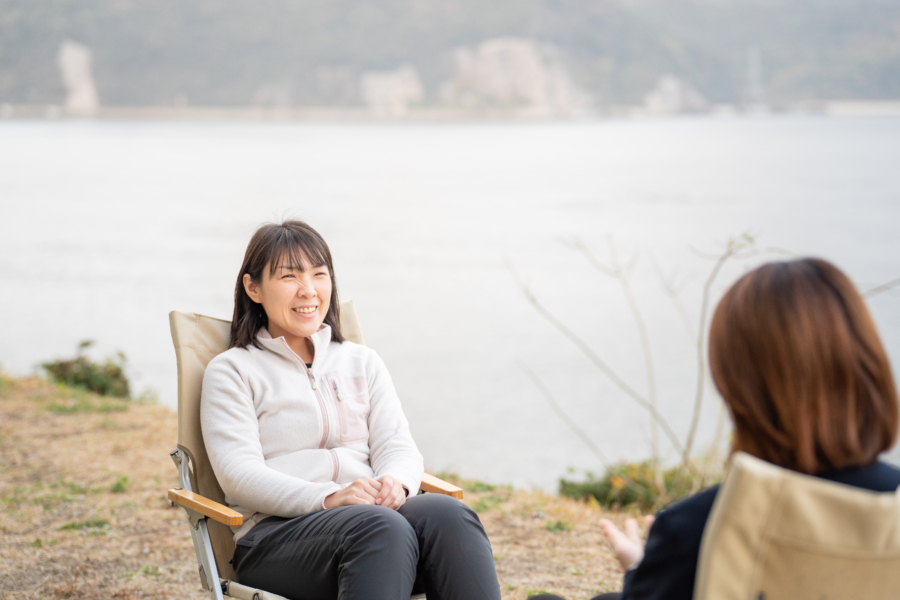
She recalls a moment that deeply impressed this philosophy upon her. While guiding a traveler from France to Matengai Cliff—one of Oki’s most dramatic viewpoints, with its 257-meter drop and grazing horses—the visitor quietly said:
“There is no noise here. It’s wonderful.”
No traffic, no machinery, no electronic hum. Only wind moving through grass and waves crashing far below. While others might focus on the grandeur of the view, this visitor savored the silence itself. In that moment, she realized a completely different doorway had opened for him.
Some are exhilarated by scale, others healed by stillness, others fascinated by rock strata. That is why she listens closely—to words, to expressions, to subtle cues—to find the right entrance for each guest.
What lingers long after the trip may not be the photographed scenery, but the scents, textures, tastes, and the quiet voice of a guide who led you gently through them. Come walk Ama Town with a guide, and savor the moments that no camera can capture.