
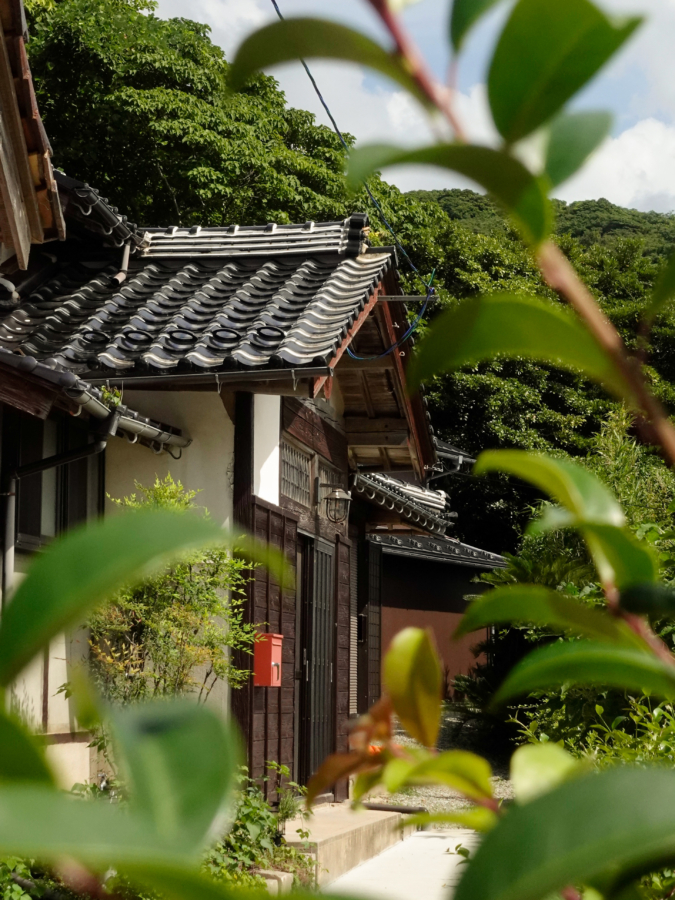
A Hidden Restaurant at the End of a Narrow Lane
Past Niburihama Park, a narrow lane climbs between the houses. At the top, an old Japanese home stands quietly. This is Chez SAWA, a hidden French restaurant known to those who seek it out.
When we opened the door, owner SAWA Okada greeted us with a smile.
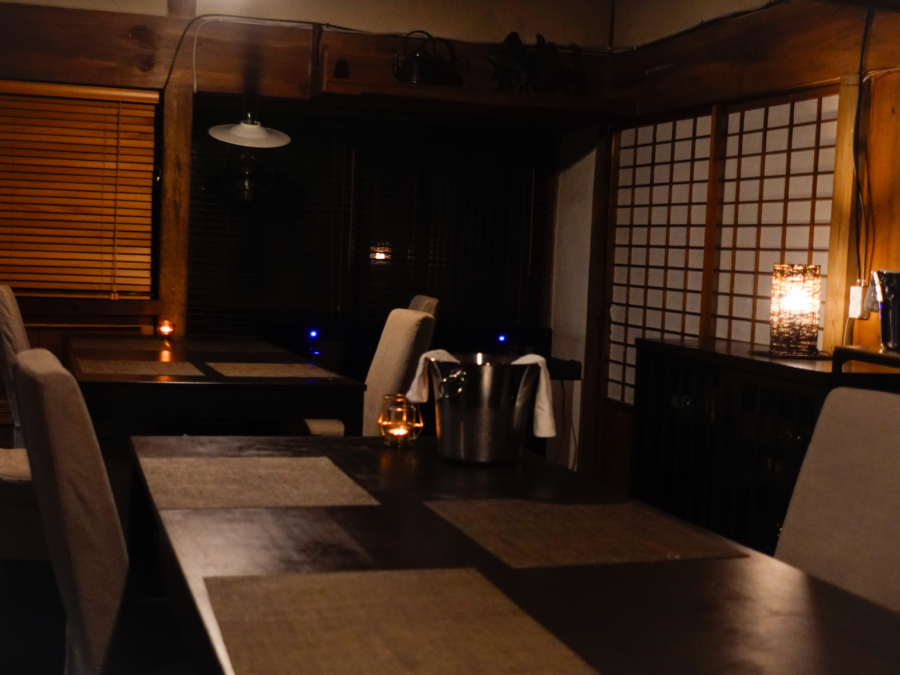
Warm light fills the compact dining room, where black accents and natural wood are illuminated by flickering candles. The space feels refined, with care evident in every detail.
A Tasting Course to Remember, One Plate at a Time
The dishes that arrive at the table have none of the heaviness sometimes associated with French cuisine. Instead, the character of each ingredient comes through with remarkable clarity.
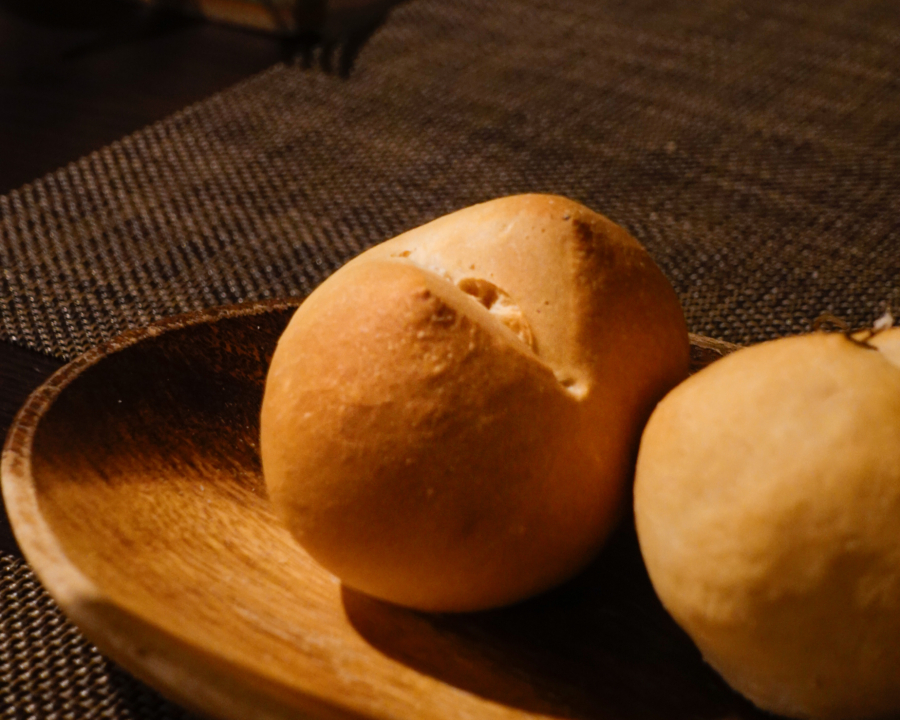
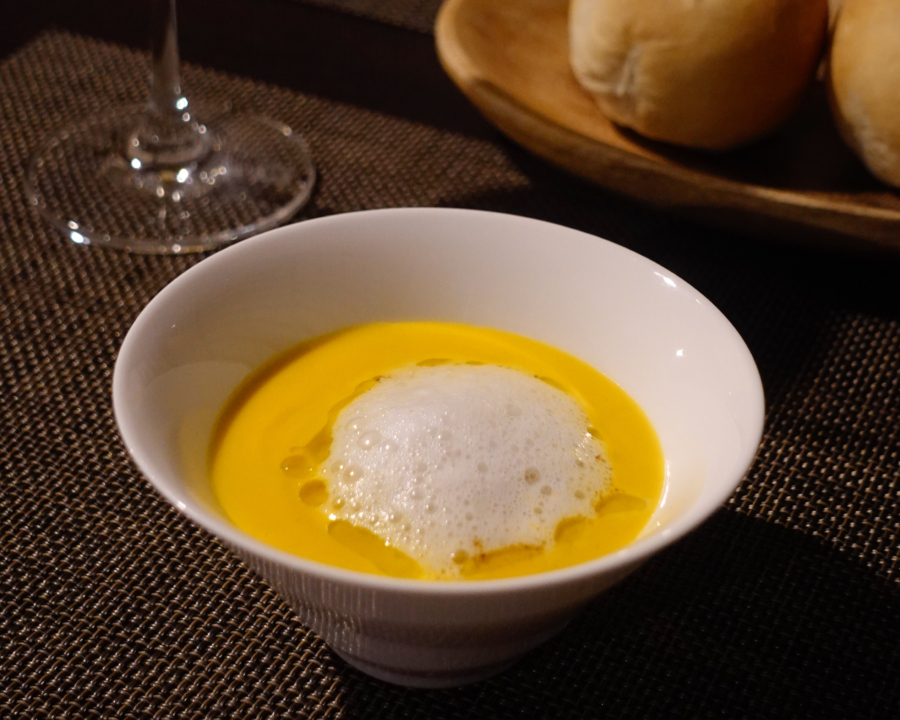
The meal begins with bread baked in-house and a vivid carrot potage.
Crisp on the outside and soft within, the bread is paired with coarse salt and fine olive oil. It is difficult to stop reaching for another piece.
The carrot potage is so smooth that it seems to dissolve on the tongue.
There is almost none of the vegetal sharpness or bitterness carrots can have. Their natural sweetness unfolds gently, followed by the soft fragrance of cumin. The soup appears simple, yet its finely judged aromatic accent draws you in.
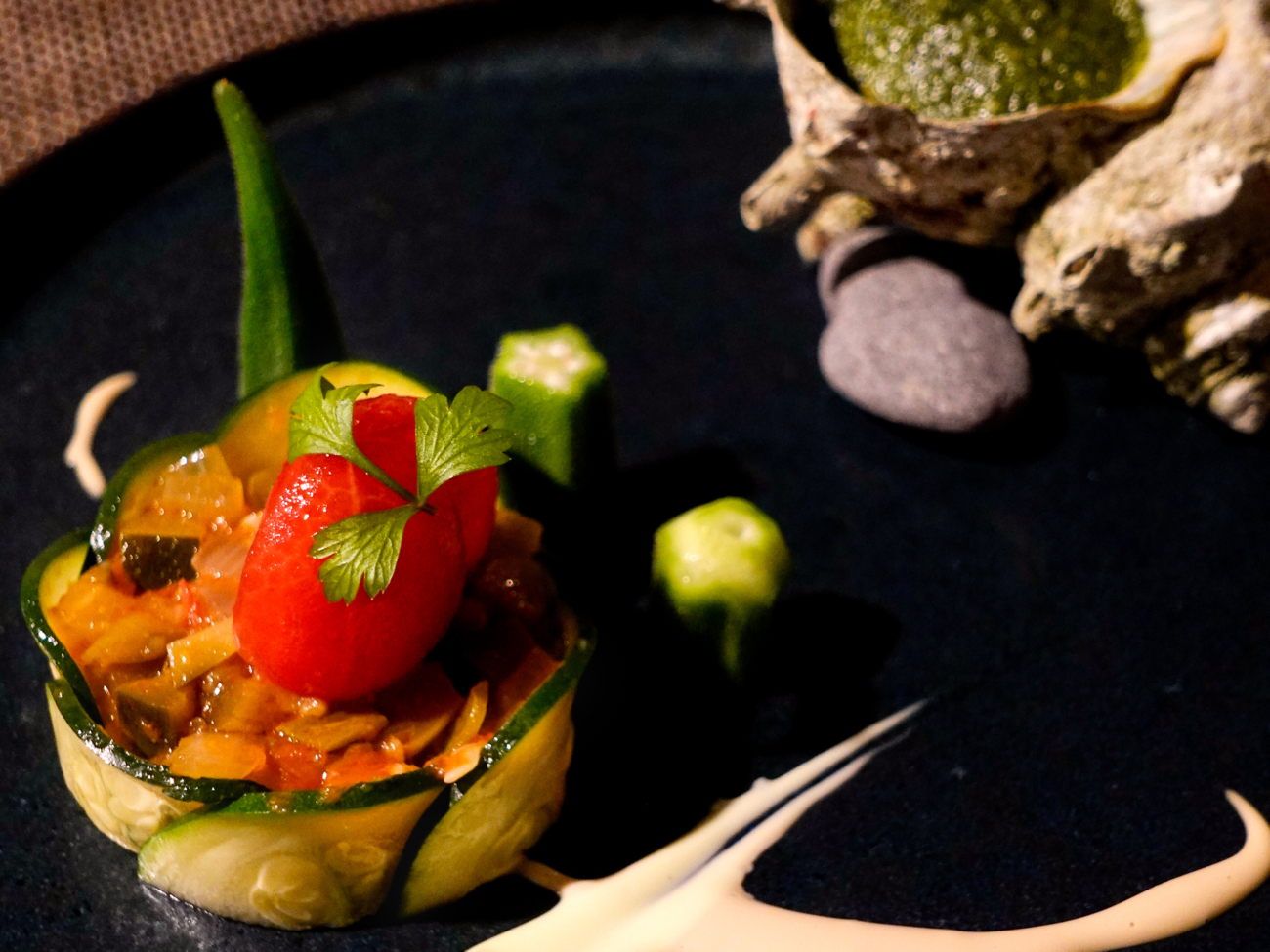
Next comes a Chez SAWA signature: herb-baked turban shell with vegetable tabbouleh, the classic French salad.
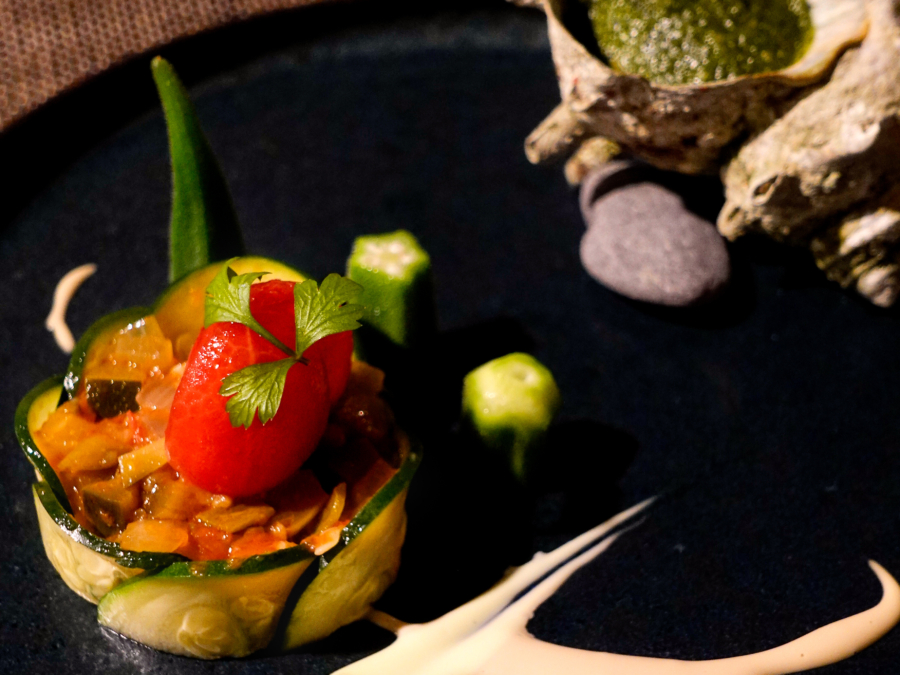
The moment it arrives, the plate catches the eye. Zucchini arranged like petals encloses chilled ratatouille and couscous. The turban shell is coated in a rich green sauce of basil, nuts, garlic, and other ingredients. Eaten together, they are exceptional. The separate grains of couscous, the firm bite of the shellfish, and the crisp texture of the accompanying vegetables make this a dish to enjoy three times over: with the eyes, through its textures, and in its flavor.
Then comes chilled capellini topped with thinly sliced, lightly seared white squid.
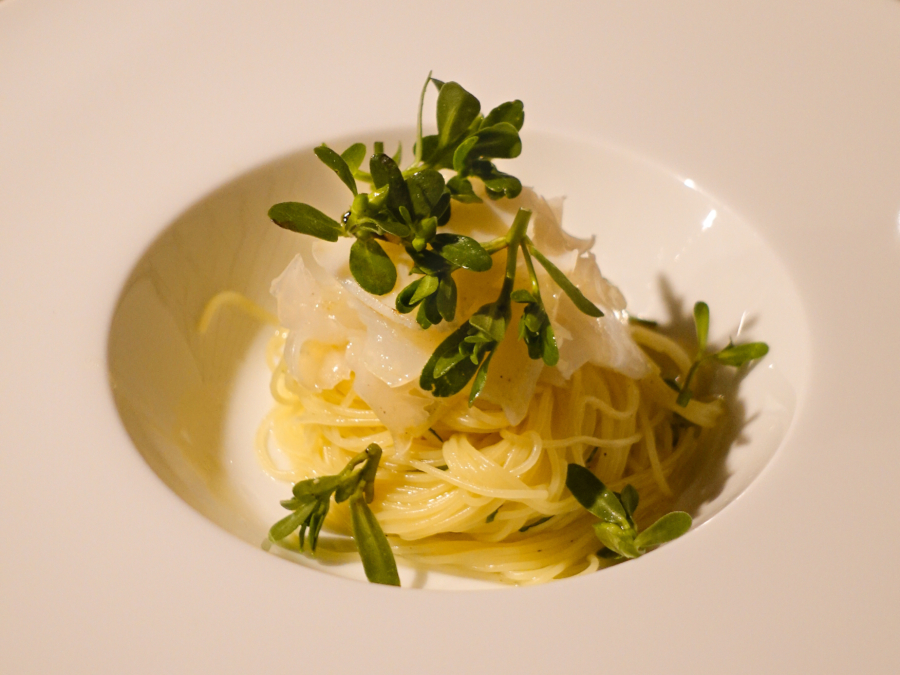
A simple seasoning of olive oil and salt brings out the squid’s concentrated sweetness. The fresh lift of shiso clinging to the noodles and the crisp bite of wild herbs gathered on the island add a lively rhythm to the silky pasta and firm squid.
The seafood pie announces itself with the aroma of butter as soon as it reaches the table.
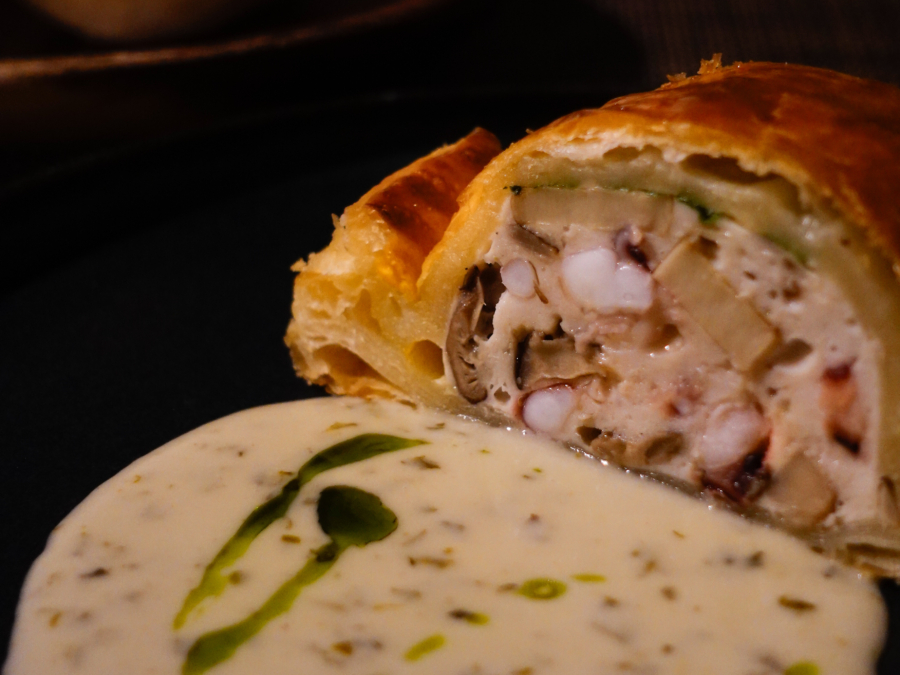
The knife breaks through a crisp, fragrant pastry shell to reveal warm, pleasantly chewy dough inside, along with the varied textures of octopus, bigfin reef squid, and mushrooms. The bright acidity of a sauce made with white wine and western mugwort is layered with vivid shiso oil, striking a fine balance with the pastry’s gentle sweetness.
The main course is roasted magret duck, raised for foie gras production.
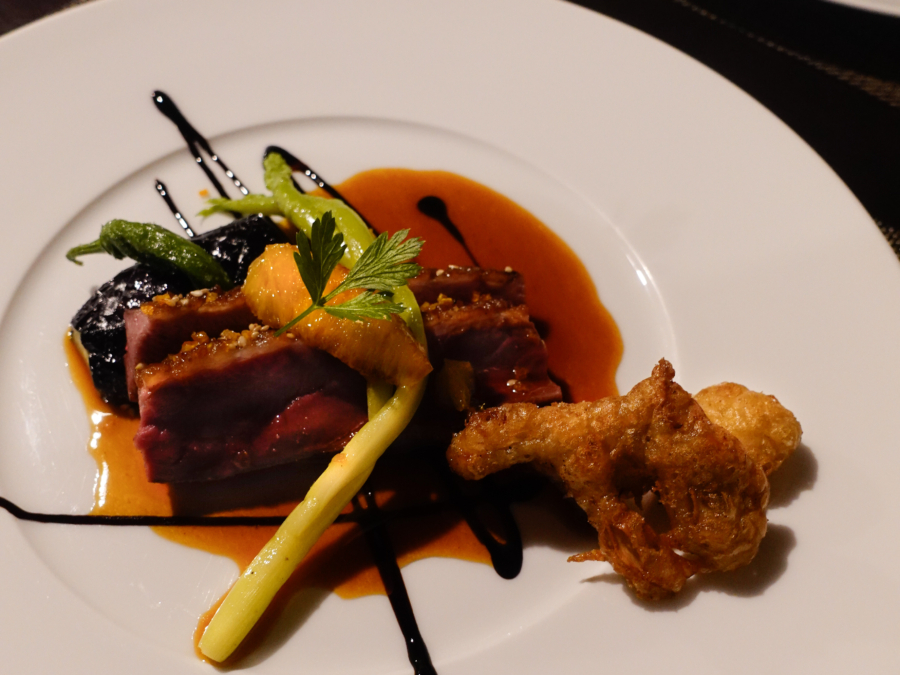
An orange sauce adds sweetness and fresh acidity to the richly savory duck, tempering the depth of its fat. A maitake mushroom beignet, coated in a batter made with buckwheat flour, spices, and beer, is surprisingly light and crisp. Thick-cut eggplant releases its natural sweetness, while the vegetables’ caramelized notes and gentle sweetness heighten the duck’s full flavor.
To finish, a tart-sweet jelly made from Berry A grapes is paired with black gelato flavored with bamboo charcoal and fukugi.
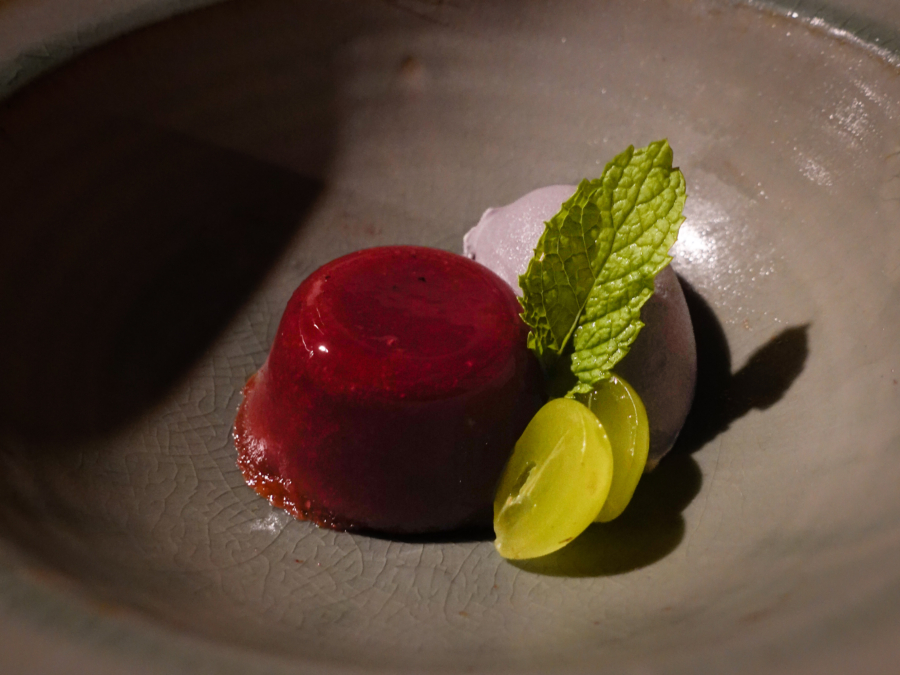
The clean, distinctly Japanese fragrance of fukugi rises through the milky richness of the gelato and the vivid acidity of the Berry A grapes.
The result is a fresh, layered finish unlike anything I had tasted before.
By the time coffee arrived, I felt the satisfaction of having traveled through a story, rather than simply eaten a meal.
Beyond Local Sourcing: How Chez SAWA Chooses Its Ingredients
What matters most when building a course like this? We asked SAWA.
Restaurants in rural Japan often emphasize chisan-chisho, or local production for local consumption. Chez SAWA takes a more flexible approach. SAWA and the chef share a guiding idea: rather than limiting themselves to ingredients from Chibu, they choose the best ingredients available that day.
Restricting the kitchen to ingredients from Chibu would inevitably narrow what can be prepared on a remote island. To serve the best possible plate from what is available each day, they also source meat and fish from trusted contacts on the Japanese mainland. The chef then turns those ingredients into assured, carefully composed dishes.
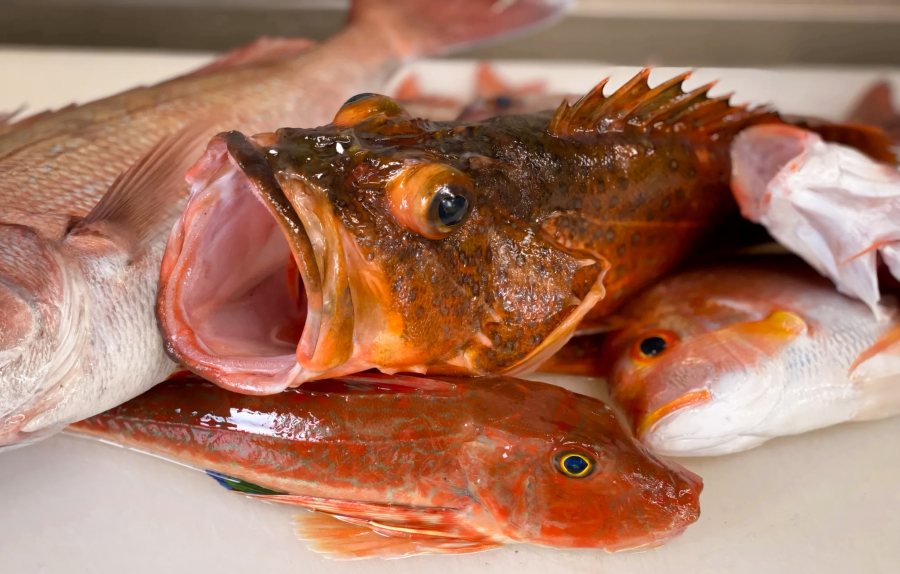 At the same time, Chiburijima offers something distinctive: cooking within a community where the people behind the ingredients are known, rather than simply placing local products on a plate.
“The fish, for example, comes in when it’s truly fresh and at its very best. I think the chef feels the same way, but being able to see the face of the person who brought it, and being close to the producers, matters. It’s also fun to talk things through with them—‘What should we do with this?’—as we cook.”
Islanders arrive with fish caught or vegetables harvested that day, and the course takes shape through those conversations. Chez SAWA’s cooking is sustained by a commitment to look beyond the boundary of origin and serve each ingredient in the form that brings out its best.
The Warmth of Being Welcomed into SAWA’s Home
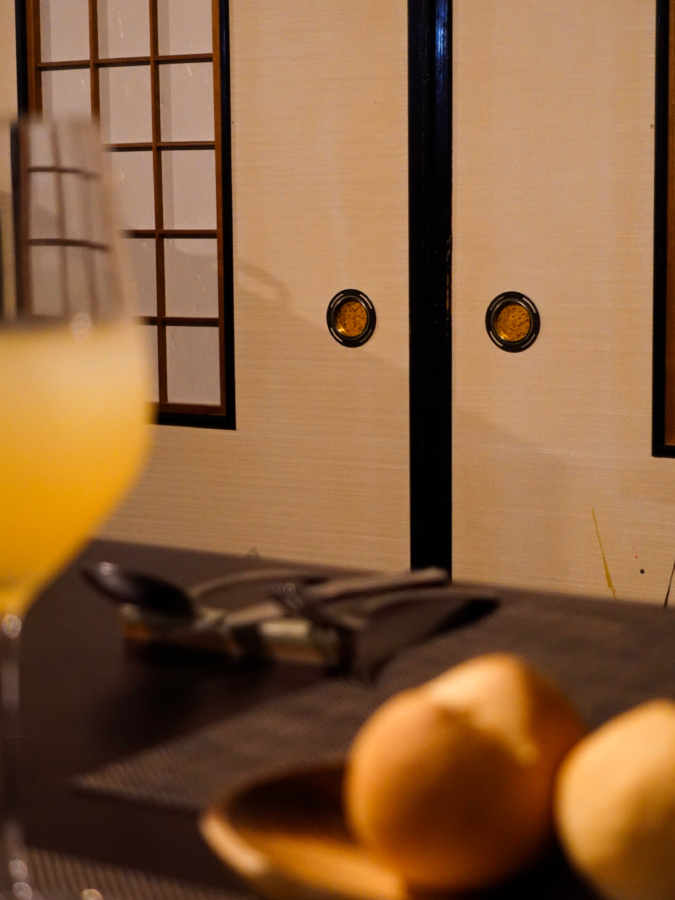
For all the sophistication of its food, Chez SAWA is filled with warmth.
In French, chez means “at the home of.” SAWA smiled as she recalled why she chose the name.
“When we decided to do this in Chibu, I didn’t want a French restaurant with a name in katakana that might feel intimidating. I wanted people to feel as though they were coming over to ‘SAWA’s place.’”
That unpretentious sense of beauty also shapes the space.
The building was originally an old home on the island, and very little large-scale renovation was done.
“For the interior, we used what was already here and brought in what was missing. We wanted to preserve the old house and keep the surroundings from distracting from the food. Most of it is really the chef’s eye.” She laughs.
Without elaborate decoration, the room retains the island home’s quiet simplicity, allowing the candlelight to settle gently into the heart.
It carried the warmth of welcoming friends into one’s home.
A Stay Woven into Island Life: Savoring the Space to Breathe
At Chez SAWA, guests can carry the lingering pleasure of dinner with them and stay the night in the same place.
The guest room contains only what is truly needed. Free of unnecessary decoration, it is simple yet refined.
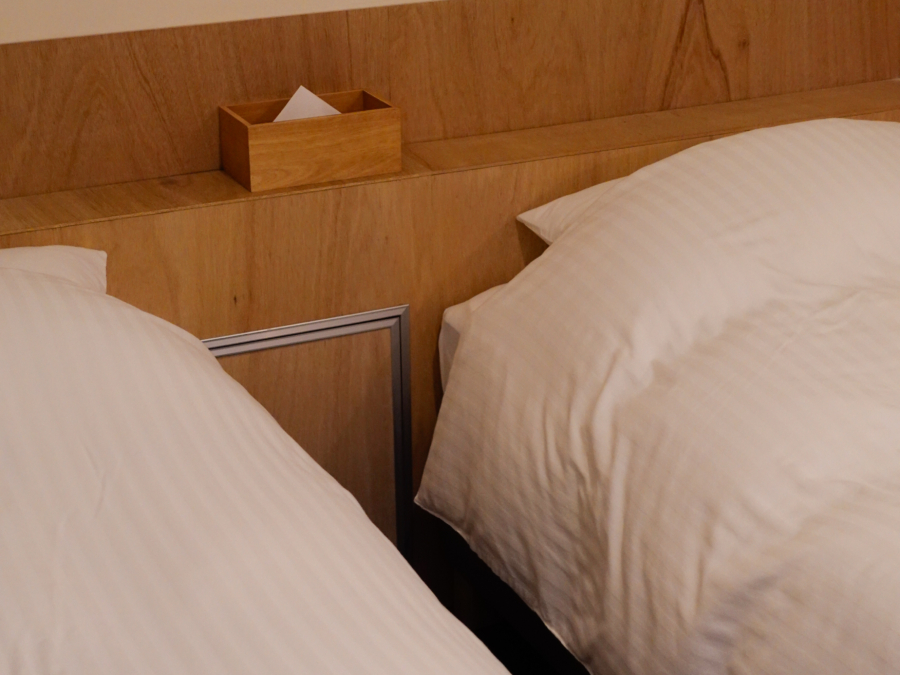
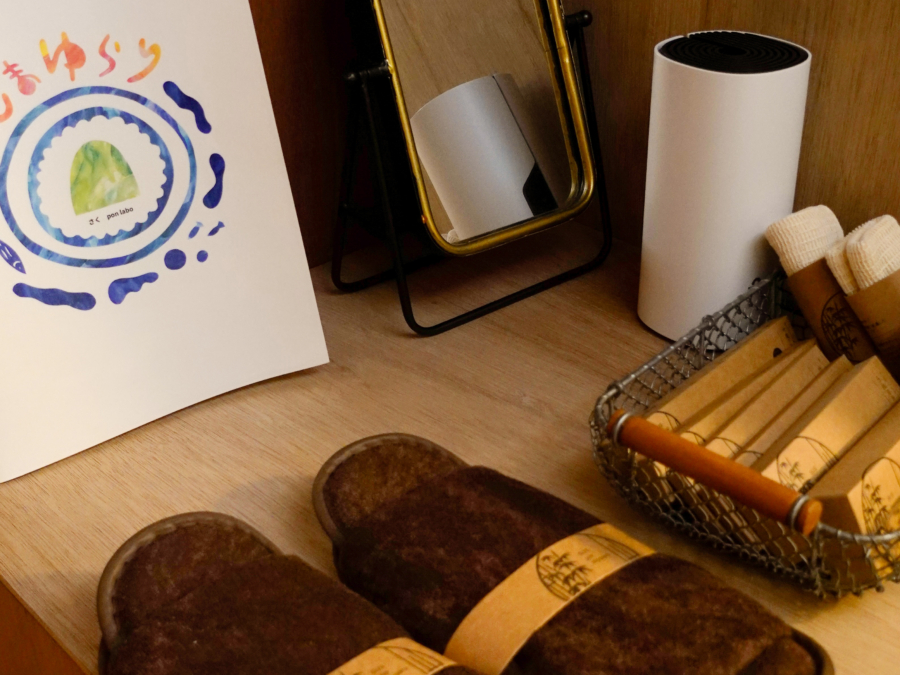 The high ceiling lends the room an open feeling, and on clear days, soft light is said to pour through the windows. It is a place to step away from everyday life and rest quietly.
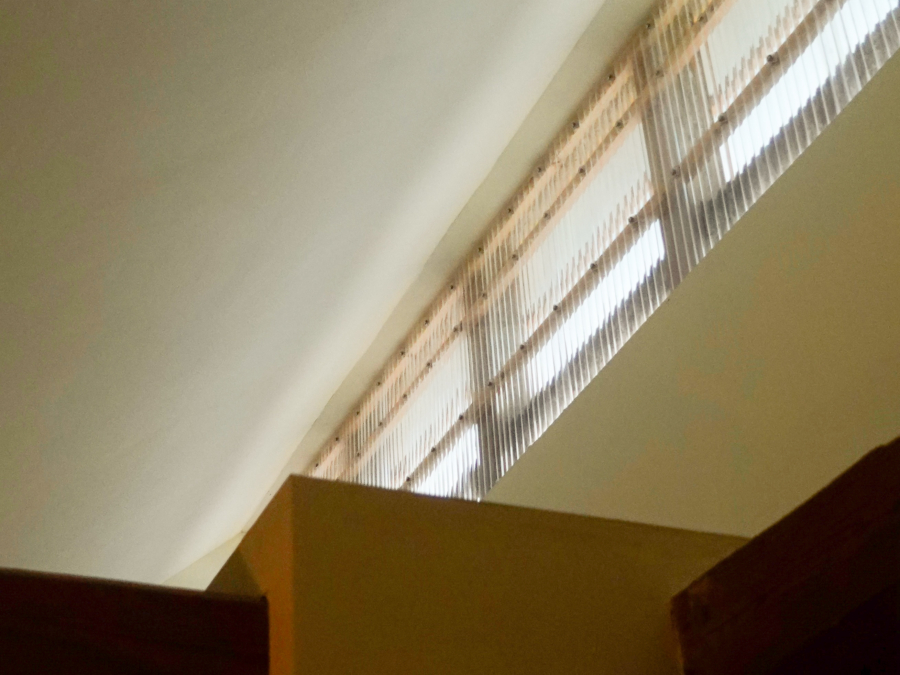 Why did Chez SAWA add accommodation to the restaurant? The answer lies in something SAWA, who came to Chiburijima from outside the island, recognizes in the people who travel here.
Some guests come from major cities such as Tokyo and Osaka, while others return repeatedly from Hong Kong. The way they spend their time at Chez SAWA differs from a typical sightseeing itinerary.
“I think people are looking for that sense of space. When someone is staying several nights and I ask, ‘What are you going to do?’ they say, ‘Nothing, really. I just wanted to take it easy on the island.’”
Away from city noise and the pressure of daily life, guests spend time doing nothing. Chiburijima offers time without a schedule: time to talk with the people they meet and to reflect on themselves. In a quiet place with few distractions, travelers leave with a clearer sense of who they are.
“We originally created the lodging because we wanted guests to be able to stay in Chibu as long as possible. We didn’t want the island to be somewhere they simply passed through for lunch or dinner. When they stay, the distance between us naturally becomes smaller.”
The sweeping views from Mt. Akahage and Sekiheki Cliff are, of course, well worth seeing.
Yet leaving after seeing only those sights would mean missing much of what the island offers. Time spent close to island life, feeling the warmth of its people, nurtures the desire to return and slowly draws more people into Chiburijima’s circle of admirers.
The Future of Chibu, Growing from Everyday Life
At a time when phrases such as “regional revitalization” and “rural renewal” are often heard, SAWA’s view is strikingly natural and grounded in everyday life.
When a dedication taiko performance was held on Chiburijima, the chef and other members of the Chez SAWA team helped run the event. Seeing them take an active role in the island’s future beyond the restaurant, we asked whether the birth of their son had changed the way she thought.
“It’s not that our son was born and suddenly we thought, ‘We’re going to change Chibu!’ or ‘We’re going to make it better!’ We don’t really feel that way. The basis of what we do is enjoying it ourselves, and then perhaps what we do naturally has an effect on Chibu. To be honest, we don’t approach it as though it has to be for some grand cause.”
Rather than carrying a grand mission, they enjoy their daily life as a family. In the process, what they do naturally connects people inside and outside the island and becomes part of Chibu’s future.
An Unforgettable Time with Someone You Love
Food that delights the eyes, surprises through texture, and unfolds on the palate, followed by the warmth of human connection: my time at Chez SAWA became an experience that extended far beyond the meal itself.
The cooking is intricate and refined, and the space is beautiful, yet nothing feels formal or forbidding. It is a singular auberge where the island’s simplicity meets assured French technique.
I hope you will come with someone dear to you and experience the kind of time that can only be found here. Years later, perhaps you will still smile as you remember it together: “That meal was truly wonderful.” “I’d love to go back.”
Chez SAWA Information
Restaurant
Lunch|12:00–14:30
Dinner|18:00–21:30
Prices|Lunch: ¥4,000 or ¥6,000 (tax included) / Dinner: ¥5,000, ¥7,000 or ¥11,000 (tax included)
Prices vary by season. Please check the official websiteThis will open in a new tab. for details (opens in a new tab).
Reservations and inquiries|050-8885-0767
The restaurant is by reservation only. Reservations are accepted by phone only.
The menu varies depending on the ingredients available that day. Please mention any allergies or foods you cannot eat when making your reservation.
Accommodation
For details about accommodation plans, rooms and access, please visit the Chez SAWA official websiteThis will open in a new tab. or book hereThis will open in a new tab. (both links open in a new tab).